Being charged with a crime can turn your life upside down. You may be worried about your freedom, your family, and your future, and it is normal to feel overwhelmed. If you are wondering what happens during your first court date in a Nashville criminal case, you are taking a step toward protecting yourself.
This guide explains what to expect at your first court appearance, how to prepare, how criminal cases move through the system, and how a Nashville criminal defense lawyer can protect your rights.
You do not have to face this alone. As a former prosecutor, Byron Pugh knows how the other side builds its cases, and he uses that insight to defend clients throughout Middle Tennessee. At Byron Pugh Legal, we are here to answer your questions, guide you, and fight for your future.
What Happens During Your First Court Date in Nashville?
Your first court date in Nashville is usually short and focused on the basics. It is not a trial, and the judge will not decide whether you are guilty or innocent at this hearing. Instead, the goal is to make sure you understand the charges against you, know your rights, and have a plan for what comes next.
Most first appearances for criminal charges in Nashville take place in Davidson County General Sessions Court. Here is what you can generally expect.
The Judge Confirms Who You Are and What You Are Charged With
When court begins, the judge or magistrate will go through the list of cases scheduled for that day. When your name is called, the court will confirm your identity and basic personal information. The judge will then review the charges against you.
You Are Told About Your Rights
The court will explain your constitutional rights. These include your right to remain silent, which means you do not have to say anything that could be used against you, and your right to have a lawyer represent you. If you cannot afford an attorney, the judge will discuss whether you qualify for a public defender.
The Judge Reviews Your Bond and Release Conditions
Next, the judge will review bond conditions that may allow you to stay out of jail while your case moves forward. The judge may keep your current bond the same, change the amount, or add specific rules you must follow. For example, in domestic assault cases, the judge may order you to have no contact with the alleged victim.
Following these conditions is very important because violating them can lead to another arrest.
Do You Enter a Plea at the First Court Date?
With misdemeanor charges, the court may ask how you plead at the first court date. Defense attorneys often enter a “not guilty” plea early in the case, which keeps all of your options open while your lawyer reviews the evidence.
You are generally not required to enter a plea at your first court appearance for felony charges. Instead, the court will schedule your next steps.
How to Prepare for Your First Court Appearance
Your first court date in a Nashville criminal case can feel intimidating, but taking a few simple steps can help you feel more prepared. Having a criminal defense lawyer by your side is important because your attorney can explain what to expect, review the charges against you, and help you understand your legal options. Your lawyer can also communicate with the prosecutor and court on your behalf when appropriate.
Before your first court date in a Nashville criminal case, give your lawyer any information or documents that could be important. Avoid discussing your charges with anyone other than your lawyer.
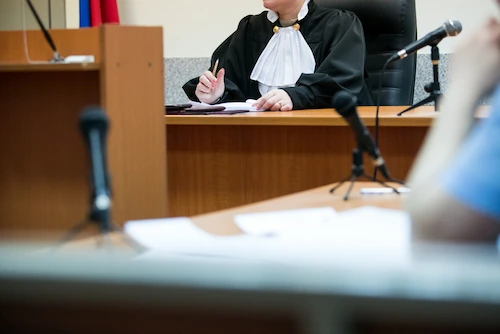
Tips for Your First Court Date
- Dress appropriately: Choose clean, neat, conservative clothing. Your appearance should show that you take the court proceeding seriously.
- Arrive early: Give yourself enough time to find the courtroom, go through security, and check in if necessary. Avoid arriving at the last minute.
- Show respect: Listen carefully if the judge or another court official addresses you. Speak politely, answer questions directly, and follow your lawyer’s instructions about when and how to respond.
The Steps in a Nashville Criminal Case: From Arrest to Trial
The criminal court process can feel confusing, especially if you have never been through it before. While every case is different, understanding the basic steps can help you know what to expect. In Nashville, most criminal cases begin in Davidson County General Sessions Court. Misdemeanor cases may be resolved there, while felony cases generally move to Davidson County Criminal Court.
Step 1: Arrest or Citation
A criminal case usually begins with an arrest or citation. For some minor misdemeanors, a police officer may issue a citation telling you when to appear in court instead of taking you to jail.
If you are arrested, you will be taken to jail for booking. This typically includes recording your personal information, taking your fingerprints and photograph, and documenting the charges.
Step 2: Bond Is Set
After an arrest, a judicial officer called a night court commissioner reviews the charges and sets your bond. Bond allows you to remain out of jail while your case is pending, subject to any conditions set by the court.
Depending on the circumstances, you may have to pay money or follow conditions such as avoiding certain people or places. Some people may be released without paying money and required to return to court.
Step 3: First Court Appearance
Your first court date generally takes place in General Sessions Court. The judge will review the charges, explain your rights, address your bond, and set the next court date. You will also need to determine whether you will hire a private lawyer or request a public defender if you qualify.
Step 4: Your Criminal Case Moves Forward
What happens next depends largely on whether you are facing misdemeanor or felony charges.
Misdemeanor cases: Many misdemeanor cases are resolved in General Sessions Court. Your case could be dismissed, resolved through a plea agreement, or handled through a diversion program if you qualify. Diversion may allow you to avoid a conviction by completing certain requirements.
If you want a jury trial, your misdemeanor case will move forward to the grand jury and, if indicted, to Criminal Court. In some situations, you may instead choose to have a General Sessions judge decide the case.
Felony cases: A felony case will typically involve a preliminary hearing, where the prosecutor must show probable cause that a crime was committed and that you may have committed it. If the judge finds probable cause, the case moves forward to the grand jury. In some cases, the defense may waive the preliminary hearing.
Step 5: Grand Jury and Indictment
A grand jury reviews evidence presented by the prosecutor in a private proceeding. You and your lawyer do not attend the grand jury presentation.
If the grand jury finds sufficient grounds to move forward, it issues an indictment, which formally charges you with a crime. The case then proceeds to Davidson County Criminal Court. A prosecutor may also take a case directly to the grand jury without first holding a preliminary hearing.
Step 6: Arraignment
After an indictment, you will appear in Criminal Court for an arraignment. The court formally addresses the charges against you and asks you to enter a plea, which is typically not guilty at this stage. The judge will also set future court dates.
Step 7: Discovery, Motions, and Negotiations
Before trial, your defense lawyer will review the evidence the prosecution intends to use. This may include police reports, videos, photographs, witness statements, and other records. This exchange and review of evidence is known as discovery.
Your lawyer may also file motions asking the judge to make decisions about the case, including whether certain evidence can be used at trial. During this stage, your lawyer and the prosecutor may discuss a plea agreement or another resolution. Many criminal cases are resolved without going to trial.
Step 8: Trial
If your case is not resolved before trial, it may proceed to a jury trial in Criminal Court. In a criminal trial, the prosecutor must prove your guilt beyond a reasonable doubt.
Your defense lawyer can challenge the prosecution’s evidence, question witnesses, and present your defense. If the jury finds you not guilty, the criminal case ends. If you are found guilty, the court will address sentencing.

Contact Byron Pugh Legal Today for a Free Consultation
Facing criminal charges can leave you with questions about what comes next and how the case could affect your future. You do not have to navigate the process alone. At Byron Pugh Legal, we are ready to step in and protect your rights.
As a former prosecutor, Byron Pugh understands how criminal cases are handled from both sides of the courtroom. Our firm represents people accused of crimes throughout Nashville and Middle Tennessee. We can help you understand the charges against you, prepare for your first court date, communicate with prosecutors, and build a defense based on the specific circumstances.
If you have been charged with a crime, contact Byron Pugh Legal today to discuss your case and learn how we can help. Call 615-255-9595 or use our online form to arrange your free consultation.